Crossing the Land Border into Nigeria: What Travelers Should Expect
Crossing into Nigeria overland is one of West Africa’s most talked-about travel experiences — and for good reason. It can be chaotic, fascinating, slow, and surprisingly smooth, all within the span of a few hours. Whether you’re arriving from Benin Republic through the famous Seme border, coming from Cameroon in the east, or entering from Niger in the north, land border crossings into Nigeria follow their own logic. This guide tells you exactly what to expect — from paperwork and procedures to unofficial fees and practical survival tips — so you arrive prepared rather than overwhelmed.
Which Land Borders Can You Actually Use?
Nigeria shares land borders with four countries: Benin Republic to the west, Niger to the north, Chad to the northeast, and Cameroon to the east. There are dozens of official crossing points, but only a handful are genuinely practical for travelers arriving overland.
Looking for accommodations? You will be redirected to Booking.com to check availability and prices. 🏨
Check Hotels & Prices →The most important ones at a glance:
| Border Post | Country | Location | Traveler Volume |
|---|---|---|---|
| Seme | Benin Republic | Near Lagos (Lagos State) | ⭐⭐⭐⭐⭐ Very High |
| Idiroko | Benin Republic | Ogun State | ⭐⭐⭐ Medium |
| Illela / Jibia | Niger | Sokoto / Katsina State | ⭐⭐ Moderate |
| Mfun / Ekok | Cameroon | Cross River State | ⭐⭐ Moderate |
| Gamboru / Banki | Cameroon | Borno State | ⚠️ High security risk |
Important: Nigerian land borders can close with very little notice. Political tensions, security operations, smuggling crackdowns, and public health emergencies have all triggered temporary closures in recent years. Always check current status through local transport operators or the Nigerian Immigration Service website before you travel.
Documents You Need Before You Arrive
This is where many travelers run into trouble. Nigeria’s entry requirements changed significantly in 2025, and arriving at a land border without the right paperwork is a recipe for being turned away — or being made to pay unofficial fees to compensate for missing documents.
For Non-ECOWAS Citizens (Europeans, Americans, Asians, etc.)
As of May 1, 2025, Nigeria phased out its Visa-on-Arrival system entirely. All non-Nigerian and non-ECOWAS travelers must now hold a valid Nigerian e-Visa obtained online before traveling. You cannot pick up a visa at a land border post.
What you need:
- Valid passport — at least 6 months validity beyond your entry date, plus two blank pages
- Nigerian e-Visa — apply in advance at immigration.gov.ng; allow up to 10 working days for approval
- Yellow Fever vaccination certificate — mandatory, no exceptions (see below)
- Digital Landing Card — completed online within 72 hours before arrival
- Proof of onward travel — return ticket or onward bus/flight booking
- Proof of accommodation — hotel booking or host’s contact details
- Sufficient funds — officers may ask you to show you can support yourself during your stay
Print everything. At land borders, connectivity and scanning infrastructure can be unreliable. A printed copy of your e-visa approval, landing card confirmation, and yellow fever certificate can prevent significant delays.
Visa Costs (2025–2026)
For a standard single-entry tourist or short-visit visa, fees generally range from $100 to $160 USD for most Western nationalities. Business multiple-entry visas are more expensive. Check the official Nigerian Immigration Service website for your country’s exact current fee.
A total of 177 countries are eligible for the online e-visa. Citizens of 25 countries must still apply through Nigerian embassies in person — check whether your nationality is in this group before assuming you can apply online.
ECOWAS Citizens: The Free Movement Advantage
If you hold a passport from one of the 15 ECOWAS member countries — Ghana, Senegal, Togo, Côte d’Ivoire, Benin Republic, Niger, Mali, Burkina Faso, Sierra Leone, Liberia, Guinea, Guinea-Bissau, Gambia, or Cape Verde — you can enter Nigeria without a visa for stays of up to 90 days.
In theory, this makes crossing smooth. In practice, the experience at the border can still involve paperwork, passport stamping, health checks, and the informal dynamics described further in this guide. The ECOWAS free movement protocol is a significant policy achievement, but its implementation at actual crossing points is inconsistent.
Bring your passport regardless — ECOWAS citizens still need a valid travel document, and a Yellow Fever certificate remains mandatory for everyone without exception.
The Seme Border (Lagos / Benin Republic): Step by Step
The Seme border crossing is by far Nigeria’s busiest and most well-known land border. Located approximately 12 km from Badagry in Lagos State, it sits on the coastal road connecting Lagos to Cotonou, the commercial capital of Benin Republic. It is the main gateway for popular overland routes toward Togo, Ghana, and beyond.
Seme has a reputation for being hectic — and that reputation is mostly earned. Here is what the crossing looks like in practice:
Entering Nigeria at Seme (arriving from Benin Republic)
- Arrive at the border gate. You will be dropped off by your transport on the Beninese side. You cross on foot to the Nigerian side — private vehicles do not cross freely without commercial permits.
- Nigerian Immigration desk. Present your passport and printed e-visa (or ECOWAS travel document). An officer checks your documents and stamps your passport.
- Health check / Yellow Fever verification. Your yellow fever card is checked here or at a nearby health post. Arrive without it and you may face an on-the-spot vaccination or be turned back.
- Customs check. Your bags may be searched, especially if you are carrying goods, electronics, or commercial quantities of anything. Declare what you have honestly.
- Onward transport. Once through immigration, taxis, shared minibuses (danfos), and private drivers are ready to take you toward Lagos or further inland. Agree on the price before getting in.
Leaving Nigeria at Seme (heading to Benin Republic)
- Get to the border from Lagos. From Badagry roundabout, take a shared taxi or motorcycle taxi (okada) to the Seme gate.
- Nigerian exit immigration. Your passport is stamped for departure.
- Cross to the Beninese side on foot. Your transport will wait or meet you on the other side.
- Exchange currency. The border area has active informal money changers. Exchange remaining Naira to CFA francs here if you are heading further west.
Expect the crossing to take anywhere from 30 minutes to 3 or more hours depending on timing. Peak hours — mornings and Fridays — are significantly slower. Plan accordingly.
The Idiroko Border (Ogun State)
The Idiroko border in Ogun State is the second major crossing point between Nigeria and Benin Republic. It connects the Ipokia area of Ogun State to Benin’s interior regions — a different route than the coastal Seme crossing.
Travelers who have used both report that Idiroko follows the same procedures as Seme with a somewhat lower volume of traffic, which can make the process slightly quicker. The surrounding area is rural and agricultural, with palm groves and farmland on both sides — a quieter atmosphere than the coastal crossing.
Idiroko makes more sense if your destination in Nigeria is Abeokuta, Ibadan, or other parts of Ogun State rather than Lagos directly. If you’re arriving from or heading to Cotonou specifically, Seme remains the more logical choice.
Other Crossings: Niger, Cameroon, and Chad
Nigeria–Niger (Illela, Jibia)
The crossings from Niger into northern Nigeria — particularly Illela in Sokoto State and Jibia in Katsina State — are used mainly by traders and travelers moving between Niamey and the large northern Nigerian cities of Sokoto, Katsina, and Kano. These border areas are remote and arid, blending into the Sahel landscape.
⚠️ Security warning: The border regions of northwestern Nigeria have seen significant banditry and kidnapping activity in recent years. As of early 2026, multiple Western governments advise travelers to reconsider or avoid travel to these areas entirely. Check your government’s current travel advisory before considering this route.
Nigeria–Cameroon (Mfun / Ekok)
Overlanders on the West African coastal route from Lagos toward Cameroon and Central Africa use the crossing at Mfun/Ekok in Cross River State, which connects to Mamfe in Cameroon. This is a remote crossing with challenging roads through Cross River State’s dense tropical forest — beautiful but slow-going.
The crossings in Borno State at Gamboru and Banki — near Lake Chad — should be considered off-limits for almost all travelers due to ongoing armed group activity in the region. Both the U.S. State Department and multiple European governments classify Borno State as a Do Not Travel destination.
Unofficial Fees and Bribe Culture: The Honest Truth
No honest guide to crossing into Nigeria by land can skip this topic. Unofficial payments — what many travelers call “dash” — are a documented reality at Nigerian land border crossings, as well as at the numerous police and military checkpoints on roads leading to and from them.
Research based on fieldwork at the Idi-Iroko and Chikanda borders found that information gaps between officials and travelers create fertile ground for unofficial payments. When travelers don’t know what fees are required and what are not, officers can invent violations, charge for services that should be free, or accept payments to overlook supposed irregularities.
What travelers consistently report encountering:
- Passport stamping fees: There is no official fee for passport stamping. A small amount is often requested nonetheless, and many travelers pay rather than argue.
- Health certificate “inspection” fees: Some border health staff request payment to review your Yellow Fever card. Not an official charge.
- Baggage inspection fees: Customs officers may open your bags and hint that a “gift” would speed things along.
- Road checkpoints: Travelers report 10 to 20+ police and military checkpoints between the Benin border and Lagos. Drivers on local transport typically handle these themselves.
How Experienced Travelers Handle This
There is no universal right answer, but the following strategies come up consistently:
- Know your rights. The more you understand what is actually required — and what isn’t — the harder it is for officials to invent obligations. Knowing the requirements is your best defense.
- Stay calm and friendly. Travelers who remain polite and engage officers as people consistently report better experiences than those who become confrontational. Genuine warmth has defused many checkpoint encounters entirely.
- Travel on local transport. When you’re on a Nigerian bus or shared taxi, the driver handles checkpoint interactions. The unofficial dynamics become someone else’s problem.
- Don’t volunteer cash. Wait to see what is actually asked rather than preemptively offering money.
- Have small bills accessible but separate. If you decide a small payment makes sense to keep moving, having a small note easily available — rather than revealing a thick wallet — is wise.
It is worth stating plainly: plenty of travelers cross Nigeria’s land borders without paying a single unofficial fee. It is entirely possible. Patience, preparation, and the right attitude go a long way.
Nigeria’s New Digital Entry System (2025)
In May 2025, Nigeria rolled out a significant overhaul of its immigration infrastructure. Beyond replacing Visa-on-Arrival with the mandatory e-visa, the Nigerian Immigration Service also introduced digital Landing and Exit Cards replacing the paper forms previously filled out on aircraft or at the border.
The Landing Card is a mandatory form required of all non-Nigerian travelers. It captures your passport details, travel plans, contact information, and accommodation address. You submit it through the Nigerian Immigration Service online portal before your trip — within 72 hours of your departure, not weeks in advance.
At land borders specifically, the digital infrastructure for verifying these forms is still being extended. In practice, some officers at Seme and Idiroko may not yet have the ability to fully verify digital submissions electronically. Having your forms completed and printed remains strongly recommended — it demonstrates compliance and can significantly reduce delays.
Yellow Fever Certificate: Non-Negotiable
Nigeria is one of the strictest countries in West Africa regarding Yellow Fever vaccination requirements. The International Certificate of Vaccination or Prophylaxis (ICVP) — the Yellow Card — is a mandatory entry requirement for all travelers, regardless of nationality.
Key facts:
- Your card must show vaccination at least 10 days before arrival (the vaccine needs time to become effective)
- The vaccination is considered valid for life under current WHO guidelines
- Keep the physical card in your travel documents at all times — health staff at the border will check it
- Arriving without a valid card can result in on-the-spot vaccination at the border health post, a fine, or being refused entry
Beyond Yellow Fever, health authorities recommend being up to date on Hepatitis A, Hepatitis B, Typhoid, and Meningitis, with a Polio booster also advised. Malaria prophylaxis is strongly recommended for travel throughout Nigeria — the country carries one of the world’s highest malaria burdens.
Currency, Cash, and Money at the Border
Nigeria’s currency is the Nigerian Naira (NGN). At land borders — particularly Seme — there is an active informal currency exchange market where you can swap CFA francs, US dollars, or other currencies for Naira.
What to know about money at the border:
- Carry cash in USD. US dollars are universally accepted and can be exchanged almost everywhere. Most border money changers prefer dollars over other foreign currencies.
- Exchange Naira before leaving Nigeria. Once you’re across the border in Benin or Cameroon, getting a decent rate for Naira becomes significantly harder. The best exchange happens right at the Seme or Idiroko border area.
- Don’t rely on ATMs at the border. ATMs at land border posts are limited, often out of cash, or out of service. Card payments are essentially non-existent at checkpoints.
- Bring small denominations. For transport, tips, and informal situations, 500 or 1,000 Naira notes are far more practical than large bills.
- Notify your bank before traveling. Nigerian bank card policies and foreign card acceptance can change unexpectedly. Carry a Mastercard or Visa debit in USD as backup.
Safety at and Around Land Borders
Nigeria’s security situation varies significantly by region. The land borders themselves are manageable for prepared travelers, but the areas you pass through on either side require genuine situational awareness.
At the Border
- Keep your passport, e-visa printout, and Yellow Fever card in a secure but quickly accessible place — a zip-up document pouch worn under clothing works well
- Watch your bags closely in crowded crossing areas; pickpocketing is a real risk at any busy border
- Ignore unsolicited “helpers” who approach you offering to guide you through the process — these are almost always informal fixers who expect payment and can create more complications than they solve
- Do not photograph military or police personnel, border infrastructure, or official buildings — this can lead to your camera being confiscated or much worse
On the Roads
- Do not travel after dark. This is the single most consistent piece of safety advice from every government travel advisory and experienced traveler. Risk of armed robbery and accidents is dramatically higher after sunset.
- Roads from Badagry to Lagos and similar border-approach routes feature numerous police and military checkpoints. Stay calm, be polite, and have your documents ready.
- Avoid public transport where possible for longer journeys — local buses and taxis are often poorly maintained and uninsured. Transport arranged through reputable hotels or travel companies is a safer choice.
Regional Risk Overview
As of early 2026, the U.S. State Department advises travelers to reconsider travel to Nigeria overall, with specific Do Not Travel warnings for Borno, Yobe, Kogi, and parts of Adamawa state. The Niger Delta states (Bayelsa, Delta, Rivers outside Port Harcourt) carry elevated risk warnings due to kidnapping and armed gang activity. The western border crossings near Lagos carry a significantly lower risk profile than northeastern and northwestern routes.
Transport Options Across the Border
Cross-Border Bus Services (Lagos–Cotonou–Accra corridor)
Several bus companies operate cross-border services on the Lagos–Cotonou–Lomé–Accra route. These buses stop at each border while passengers cross on foot; the driver waits on the other side. This is generally the smoothest way to make the crossing, as the driver knows each checkpoint and handles the logistics. Note the color or markings of your vehicle so you can find it again after clearing immigration.
Total journey time for Lagos to Accra by road ranges from 12 to 24+ hours depending on wait times at the four border crossings along the route.
Shared Taxis and Minibuses
From Badagry or Cotonou, shared taxis and minibuses shuttle regularly to the Seme border. From the border into Lagos, danfos and shared taxis are widely available. This is the most common option for travelers on a budget or making shorter regional hops.
Private Vehicles
Overlanders driving their own vehicles face additional paperwork — vehicles need to be declared at customs, and a Temporary Import Permit may be required. In practice, customs procedures for private vehicles at Nigerian land borders can be inconsistent. Research the current requirements specific to your route and vehicle registration carefully before attempting a land crossing by private car.
Top 12 Practical Tips for a Smoother Crossing
- Apply for your e-visa at least two weeks early. Standard processing is 10 working days. Don’t leave this until the week before your trip.
- Complete your digital Landing Card within 72 hours of travel. Do it the day before — not two weeks in advance.
- Print everything. E-visa, landing card confirmation, yellow fever certificate, accommodation booking, return ticket. Paper beats a dead phone.
- Cross in the morning on a weekday. Monday through Thursday mornings typically see shorter queues than Friday afternoons or weekends.
- Carry your Yellow Fever card in your hand. Health checks happen quickly and separately from immigration — having it immediately accessible avoids being pulled to the side.
- Know what’s free and what isn’t. Passport stamping, health checks, and bag searches are all free. If asked for money for any of these, you are entitled to ask for an official receipt — sometimes this question alone ends the conversation.
- Dress practically, not flashily. Expensive watches, jewelry, or visible branded electronics make you a target in busy border areas.
- Keep a separate cash stash. Keep the bulk of your cash hidden, with only small bills accessible for transport and minor needs.
- Stay with your travel companions. Cross together and don’t let your group get split up by officials directing you to different windows.
- Have embassy contact details on your person. For genuine emergencies, know who to call — both your country’s embassy in Nigeria and the Nigerian emergency number 112.
- Take malaria prevention seriously. Start prophylaxis as recommended by your doctor before travel, and continue for the recommended period after returning home.
- Never drive after dark. Plan your crossing so you reach your destination well before sunset.
FAQ: Your Most Common Questions Answered
Can I get a Nigerian visa at the land border?
No. As of May 2025, all visas must be applied for online before travel. There is no visa on arrival and no visa at the border for non-ECOWAS travelers. If you arrive without a valid e-visa, you will be turned back.
How long does crossing the Seme border typically take?
Anywhere from 30 minutes to 3–4 hours, depending on time of day and day of week. Early morning on a weekday is fastest. Friday afternoons and market days are the worst. Come prepared to wait.
Is the Seme border open 24 hours?
In principle, yes. In practice, staffing levels drop significantly overnight. For safety reasons, arriving at a Nigerian border crossing in the middle of the night is not recommended regardless of official hours.
Do I need a return ticket to enter Nigeria?
It is not always strictly enforced at land borders, but proof of onward travel is a documented requirement. Carry at least a bus booking or flight itinerary showing you intend to leave the country.
Can I enter Nigeria without a Yellow Fever certificate?
Officially, no. Some travelers report getting through without one, but this typically involves unofficial payments or being vaccinated on the spot at the border under uncertain conditions. Get vaccinated properly before you travel.
What’s the security situation at the Seme and Idiroko borders?
Both are in the relatively lower-risk southern part of Nigeria. The borders themselves are busy and chaotic but are not active conflict zones. The main concerns are petty theft in crowded areas and informal fees from officials. The high-risk areas of Nigeria — Borno, Yobe, the northwest — are far from these western border crossings.
Can I cross from Cameroon into Nigeria by land?
The crossing at Mfun/Ekok in Cross River State is used by overlanders on the West Africa coastal route. It involves challenging roads and a remote environment. The northeastern Cameroon/Nigeria crossings in Borno State should be avoided due to active security conditions.
Final Thoughts: Is the Overland Crossing Worth It?
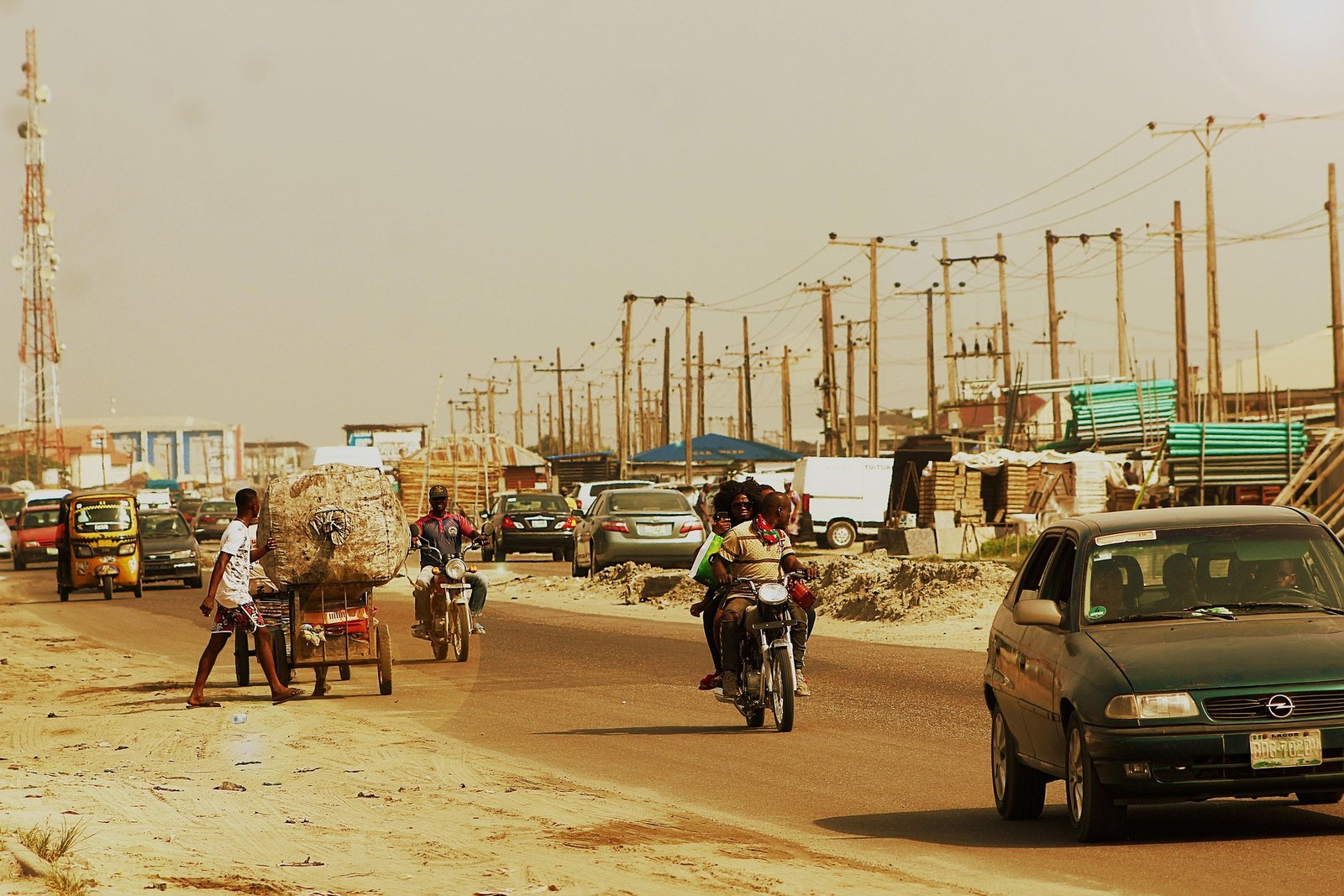
Crossing into Nigeria overland is not always comfortable. It is rarely quick. It can be unpredictable. But it also gives you an immediate, ground-level introduction to one of the most dynamic countries in Africa. The sheer energy at the Seme border — traders hauling goods, money changers calling out exchange rates, motorcycles threading through crowds, the smell of street food on the Beninese side giving way to the entirely different noise and scale of Lagos on the other — is something no airport arrival can replicate.
Go prepared. Have your documents in order. Arrive in the morning. Stay calm at checkpoints. And once you’re through — welcome to Nigeria.
📌 Disclaimer: Travel requirements, visa fees, and border procedures change regularly. Always verify current requirements with the Nigerian Immigration Service (immigration.gov.ng) and your government’s official travel advisory before your trip. Last updated March 2026.
Published on seekroutes.com — Your Guide to Overland and Sea Routes in Africa and Beyond.
Want to make your trip unforgettable? You will be redirected to GetYourGuide for top-rated tours, excursions, and experiences. 🌍
Discover Tours & Activities →