Living in a Nigerian Neighborhood as a Foreigner
Most travel content about Nigeria describes the country from the outside — what to see, where to go, how to cross the border. This article is about something different: what it is actually like to settle into daily life in a Nigerian neighborhood, not as a tourist passing through, but as a foreigner who wakes up there every morning and has to figure out how things work.
The experience is layered, often contradictory, and rarely what anyone expects. This is an honest account of it.
Looking for accommodations? You will be redirected to Booking.com to check availability and prices. 🏨
Check Hotels & Prices →The Two Worlds Every Foreigner Navigates
The expat life in Nigeria is such that most foreigners live in gated communities, especially on Lagos Island, and rely on private cars with personal drivers moving them around. They can conduct their business without significant language barriers, as English is widely spoken. Smartraveller
This is the surface reality. It is also only part of the picture.
Nigeria presents every foreign resident with a choice that doesn’t resolve itself: you can live entirely within the expat bubble — gated estate, chauffeured car, international supermarket, rooftop bar — and have a comfortable, safe, somewhat sanitized experience of the country. Or you can step outside it, with all the richness and all the friction that involves. Most long-term foreign residents end up somewhere between the two, moving between worlds depending on the day, the task, and what they feel like navigating.
The bubble is not dishonest. Culture shock in Lagos can be significant due to the country’s glaring inequality. The wealthy live worlds apart from most of the population living in informal settlements. While you may stay in gated communities, this can create a bubble that separates you from reality. Alarinka Recognizing that bubble for what it is — a practical necessity in some respects, a distortion in others — is the first step toward a more honest relationship with the place you are living in.
Choosing Where to Live
The neighborhood you choose shapes your entire experience of Nigerian life. The options are not equal, and the decision matters more than in most countries.
In Lagos, areas like Ikoyi, Victoria Island, and Lekki are popular with expats and upper-middle-class Nigerians. In Abuja, Maitama and Asokoro are considered safer areas. Nigeriansearchguide
Victoria Island and Ikoyi in Lagos are where the majority of international companies, embassies, and foreign residents concentrate. The streets are relatively well-maintained by Lagos standards, security infrastructure is dense, international restaurants and supermarkets are accessible, and the energy is cosmopolitan. The trade-off is cost and isolation: rents are among the highest in sub-Saharan Africa, and the lifestyle can feel disconnected from the Nigeria that surrounds it.
Lekki offers a middle ground — newer, more residential, with large gated estates, shopping malls, and a growing creative scene. It has become the preferred area for younger expats and Nigerian professionals who want more space and slightly lower costs than Ikoyi without sacrificing security or amenities.
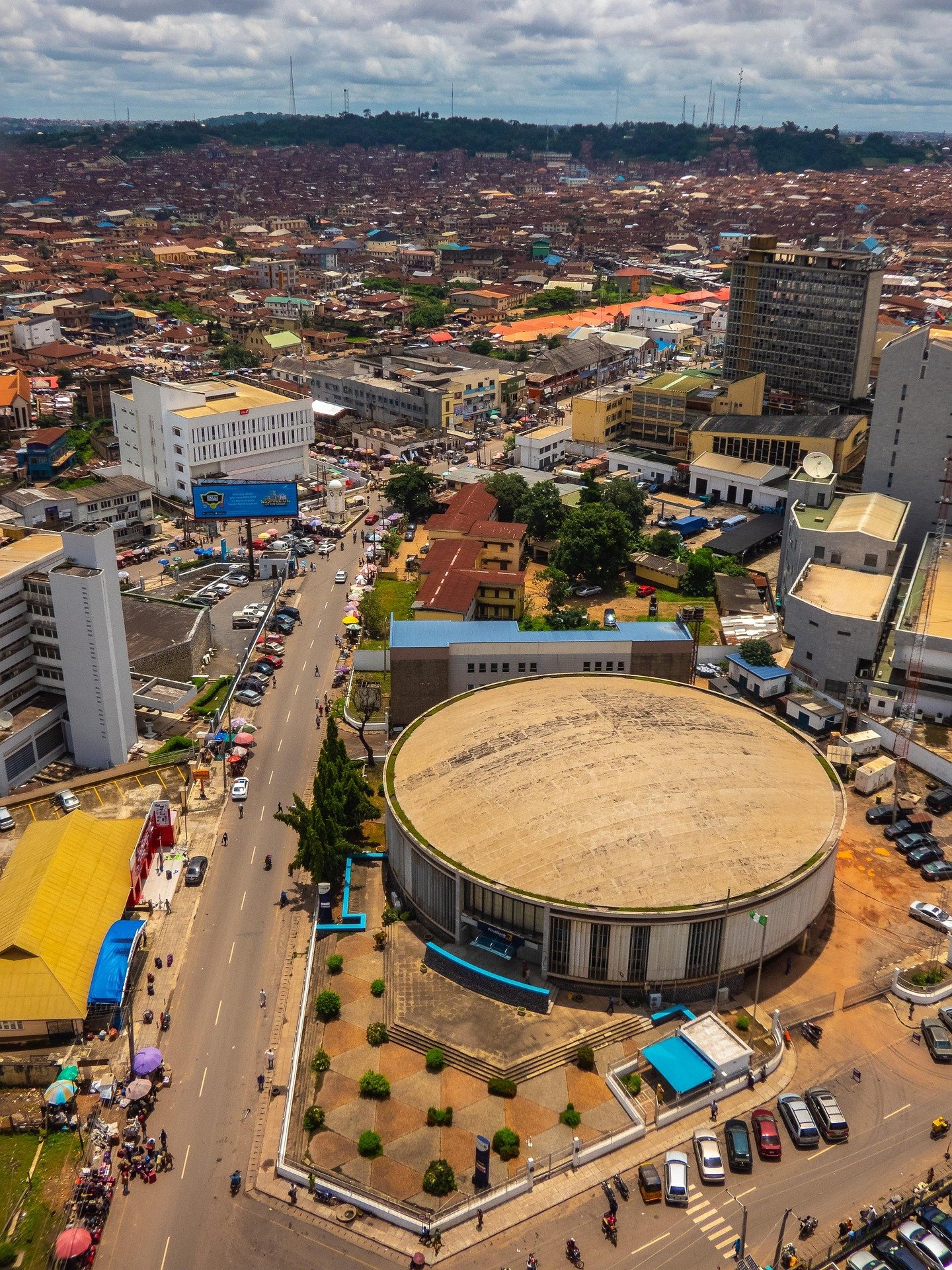
The mainland — Yaba, Surulere, Ikeja — is where most ordinary Lagosians live, and where the city’s texture is most legible and most alive. Rents are dramatically lower, markets are richer, community life is more visible, and the experience of Nigeria as a whole is more present. The trade-off is infrastructure: power cuts are more frequent, security arrangements are less formal, and getting to the island for work involves either a long road commute or a ferry.
Abuja presents a different equation entirely. The city was purpose-built as a capital and has wider roads, more organized neighborhoods, and a notably calmer atmosphere than Lagos. The largest groups of expats in Nigeria come from other West African countries through ECOWAS, followed by significant populations from India, Lebanon, China, the UK, and the US working in multinational companies and the development sector. Tripadvisor In Abuja, this international community is particularly visible, and the city’s diplomatic district gives it a different character from the commercial intensity of Lagos.
Renting: What Nobody Warns You About
The rental market operates under specific rules, with annual rent paid upfront and neighborhoods designated for expatriates for security reasons. Travel.gc.ca
The annual upfront payment requirement is the single most disorienting element of Nigerian housing for new arrivals from countries where monthly rent is standard. In Nigeria, landlords typically require one to two years of rent paid in advance — in full, at signing. For some properties this extends to three years. The logic is the landlord’s protection against a tenant who stops paying and is difficult to evict, but the practical implication for a foreign renter is that your first housing transaction in Nigeria requires an enormous cash outlay before you have established local banking, before your Nigerian accounts are operational, and often before you have been paid your first local salary.
As of early 2026, average residential property prices in prime Lagos areas like Ikoyi, Victoria Island, and Banana Island range from roughly 800,000 to 2 million Naira per square meter. Tripadvisor For rentals, a furnished two-bedroom apartment in Victoria Island runs approximately ₦5 to ₦12 million per year depending on building quality and inclusions. The same apartment in Yaba on the mainland costs roughly a third of that.
Overall, Lagos is around 61% less expensive than New York excluding rent, and cost of living in Nigeria is on average about 57% lower than the United States. Nigerian Finder Once you are established, the day-to-day cost of living is genuinely low by international standards. Getting established is the expensive part.
The Generator: The Rhythm of Daily Life
The first thing a new foreign resident notices, usually on the first evening, is the generator. Its presence — or absence — defines everything about the quality of life in your home.
Nigeria’s electricity grid cannot reliably supply continuous power. In many neighborhoods, grid electricity arrives for a few hours a day if you are fortunate, and not at all on bad days. Generators are not an emergency backup — they are the primary power source, and the grid power is the supplement. Many homes rely on generators or solar systems to supplement the sometimes inconsistent national grid. Nigeriansearchguide
The consequences ripple through everything. The costs of utilities and security are often covered by employers for expat packages, but poor power supply means many Nigeria expats need to invest in a generator, which is expensive to buy and maintain. Nigerian Finder Fuel for generators is a real household budget line. The noise of the generator is the ambient soundtrack of home. Air conditioning is luxury that has to be actively managed against fuel costs. When the generator runs out of fuel at 2am — which happens — the heat of a Lagos night with no airflow is immediately visceral.
Longer-term residents often invest in solar panels and battery storage as a more sustainable alternative to diesel generators, particularly as solar costs have fallen. For shorter stays, negotiating a generator-included rental is essential — any apartment offered without guaranteed backup power should come at a significant discount.
Water, Food, and Markets
Tap water is not safe to drink anywhere in Nigeria. Nigerian Finder This is not a guidebook precaution — it is a baseline operating condition. Bottled water for drinking, filtered water for cooking, and vigilance about ice and raw foods washed in tap water are permanent features of domestic life.
Beyond that, the food situation is genuinely one of the pleasures of living in Nigeria rather than just visiting. Local produce is generally cheap and available at local markets. Nigeria is a multi-ethnic society with huge variation in foods and flavors across different regions. Expats will find meat, seafood, and many exotic fruits year-round at colorful markets in towns and cities. Nigerian Finder
The markets are the center of neighborhood life and the best argument against living entirely in the expat bubble. A morning at Mile 12 Market in Lagos — the largest food market in West Africa — is an education in scale and abundance. Tomatoes, peppers, and plantains in quantities that seem impossible. Live fish. Dried spices in cloth sacks. Fabric merchants next to mobile phone accessory stalls next to a woman frying akara over a coal pot. The prices for fresh produce are a fraction of anything you would find in an international supermarket.
Local tailors offer bespoke clothing creations at very affordable rates — you choose your own fabric and have unique outfits made to suit your style. Nigerians are fashionable people, and locally designed clothing lets you engage with current trends in a very personal way. Alarinka For foreign residents who connect with a good tailor early in their stay, this becomes one of the genuine pleasures of Nigerian daily life.
Security and the Gate
Security is the most practical and most emotionally complex aspect of living in Nigeria as a foreigner.
Accommodation compounds usually have 24-hour security, which may include armed guards, security cameras, and access control. Nigerian Finder This is standard for the kinds of properties most foreign residents occupy. The guard at the gate, the boom barrier, the security camera above the entrance — these become so normal so quickly that you stop noticing them.
What you do notice, and what takes longer to process, is what they represent. The gate is a marker of inequality as much as a practical security measure. Life inside it operates on different terms from life outside. The domestic staff, guards, and drivers who cross the gate every day to work in your home and then return to their own neighborhoods experience both worlds simultaneously in a way that most foreign residents do not.
Nigerians are very hospitable and friendly to newcomers. Many expats report feeling welcomed and supported by local communities, making it easier to build social networks and friendships. This sense of belonging can be invaluable when adjusting to life in a new country. Thinking Nomads The warmth is real and not performative. But it exists alongside material conditions that are genuinely difficult, and the most thoughtful foreign residents find ways to engage with that reality honestly rather than treating hospitality as permission to look away from it.
Building a Community: Faster Than You Expect
One of the consistent surprises reported by foreigners who settle in Nigerian neighborhoods is how quickly a genuine sense of community forms — not just within the expat network, but with Nigerian neighbors, colleagues, and the web of people who become part of daily life.
The neighbor who appears at your door within a week of moving in to introduce himself and invite you to his family’s naming ceremony. The woman at the corner kiosk who starts setting aside your preferred brand of water before you arrive. The security guard who learns your schedule and has the gate open before you reach it. These small calibrations of relationship happen naturally and quickly in Nigerian neighborhood life, because relationships are the infrastructure here in a way they are not in more anonymous urban environments.
The Nigerian people make Nigeria a nice place to live. They love to love people. Upon arrival, many expats report that there wasn’t one person who didn’t have a smile on their face. Alarinka
The expat community itself is its own resource. The city’s ecosystem offers ample opportunities for networking, with events hosted by organisations like the Lagos Chamber of Commerce and Industry, European Chamber of Commerce, Nigerian-German Chamber of Commerce, Japan External Trade Organization Lagos, and the Nigerian-British Chamber of Commerce, providing platforms for expats to engage with local businesses. Rogue Wanderers These formal networks are useful. The informal ones — built through church, market, neighborhood WhatsApp groups, and the overlapping social circles of Lagos and Abuja — are often more immediately practical.
Healthcare: The Honest Picture
Health facilities in Nigeria are limited and well below Western standards. Public healthcare is adequate for routine treatments and check-ups but is hugely underfunded. Nigerian Finder
For foreign residents, private healthcare in Lagos and Abuja is a different matter. A tier of private hospitals — including Eko Hospital and Reddington Hospital in Lagos, and Nizamiye Hospital in Abuja — operates at a standard adequate for most non-emergency care. These facilities expect payment upfront, are used by wealthy Nigerians and expatriates, and have doctors who are often trained abroad.
Expatriates should build a relationship with a trusted general practitioner and understand the referral process for specialists. Prevention through regular health check-ups and vaccinations remains an effective strategy. Psalms of Sarah For anything requiring specialist intervention, surgery, or intensive care, medical evacuation to South Africa, the UK, or the UAE is what most expat packages and insurance policies cover. This is not theoretical — it is how serious medical situations are routinely handled for foreign residents.
Comprehensive expat health insurance that explicitly covers medical evacuation from Nigeria is not optional. Repatriation insurance is now mandatory under the new Expatriate Administration System, costing $500 to $1,000 annually depending on stay duration. Travel.gc.ca Even if it weren’t mandatory, it would be essential.
The Cost of Comfort
For the average expat, the total cost of living in Lagos ranges from ₦15 million to ₦36 million ($9,375 to $22,500) per year, depending on lifestyle choices, housing preferences, and family size. Rogue Wanderers
That range is wide because the choices are wide. A foreign researcher staying in a shared apartment in Yaba and eating mostly local food lives at one end of that spectrum. A corporate executive in a Victoria Island compound with a driver, domestic staff, and children in international school lives at the other. Both are living in Nigeria. Their daily experiences barely overlap.
In Lagos, international school fees range from NGN 2 to 5 million annually ($1,310 to $3,280) for high-end Nigerian private schools offering international curricula. Full international schools charge significantly more. Travel.gc.ca For families with children, this is the dominant cost factor after housing.
What Actually Changes You
Foreign residents who stay long enough — six months, a year, several years — consistently describe a shift in how they think about certain things.
The relationship between infrastructure and daily ingenuity. Nigerians improvise solutions to problems that would paralyze most systems — and they do it cheerfully, without waiting for formal systems to be fixed. This is partly a product of necessity, but it produces a practical creativity that becomes genuinely admirable once you stop mourning the infrastructure that should be there.
The understanding of time and relationship as primary currencies. Getting things done in Nigeria runs on people knowing each other and trusting each other, more than on systems operating impersonally. Once you accept this and invest in relationships rather than fighting the absence of impersonal systems, almost everything becomes more navigable.
And the recalibration of what “comfortable” means. Many expats discover they can live quite comfortably at a significantly lower cost than in most major Western cities. Groceries and clothing are inexpensive, and often exactly what you want, from local markets. Thinking Nomads The discomforts — power cuts, traffic, bureaucratic friction — are real. But the pleasures — food, music, human warmth, the energy of a city that never stops — are also real. Most people who stay long enough find the balance tips further toward pleasure than they expected from the outside.
Nigeria does not let you stay indifferent to it. It demands engagement — with its problems, its contradictions, its extraordinary people, and its absolute refusal to be neatly categorized. That is exhausting sometimes. It is also, ultimately, why so many foreign residents describe their time in Nigeria as among the most vivid of their lives.
📌 Regulations, costs, and neighborhood conditions change. Rental prices reflect early 2026 estimates and fluctuate with the Naira exchange rate. Last updated March 2026.
Published on seekroutes.com — Overland and Sea Routes in Africa and Beyond.
Want to make your trip unforgettable? You will be redirected to GetYourGuide for top-rated tours, excursions, and experiences. 🌍
Discover Tours & Activities →