
Why Overland Travel Changes How You See Distance
<p>Google Maps lies to you. That 300-mile drive? It looks trivial on a screen—zoom out, and entire countries shrink to thumbnails. But pile into a car, truck, or RV for real overland travel, and distance reveals its true nature: a relentless, shape-shifting beast that warps time, tests patience, and rewires your brain.</p>

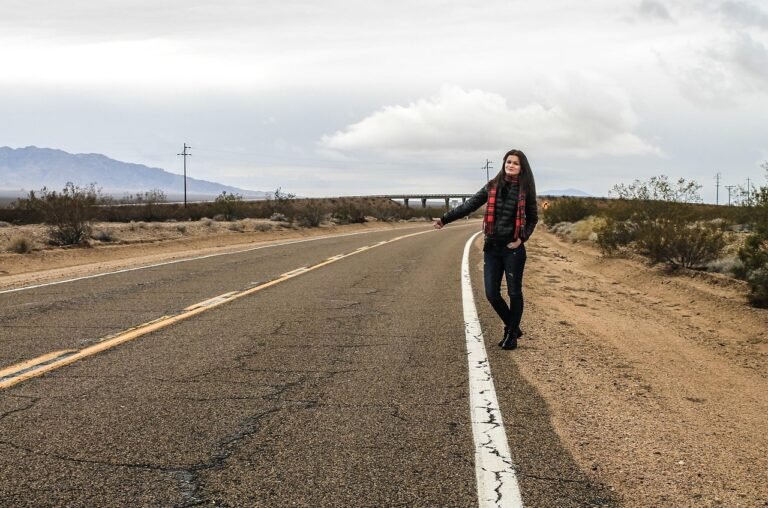
<div class="road-image">The Horizon Never Ends</div>

<h2>1. Time Expands Exponentially</h2>
<p>Flight math is linear: 500 miles = 1 hour. Overland math is a cruel exponential curve. That same 500 miles becomes 8-10 hours, but <em>feels</em> like days. Why? Terrain, traffic, weather, breaks, and the human need to eat, stretch, and question your life choices. A 1,000-mile road trip that seemed "doable in two days" morphs into a 4-day odyssey of white-knuckled interstate slogs and "are we there yet?" whispers.</p>

<div class="highlight">
    <strong>Real-World Proof:</strong> Drivers consistently underestimate travel time by 20-50%. Studies from the AAA Foundation show people plan for "best-case" speeds (75 mph highway bliss), ignoring the reality of 55 mph averages with stops, construction, and that one guy doing 40 in the left lane.
</div>

<h2>2. The World Unfurls in Layers</h2>
<p>A plane gives you a god's-eye view: abstract patterns from 35,000 feet. Overland travel forces you through the strata—city sprawl bleeds into suburbs, then farmland, forests, mountains. Each mile peels back a layer of reality you miss at 500 mph. You <em>feel</em> the topography: the boredom of flat plains, the adrenaline of winding passes, the isolation of endless desert.</p>

<ul>
    <li><strong>Urban to Rural Gradient:</strong> 50 miles out of NYC, and skyscrapers yield to warehouses, then fields. Distance = transformation.</li>
    <li><strong>Micro-Changes:</strong> Notice the gas stations thinning? Billboards vanishing? That's distance accumulating, mile by grinding mile.</li>
</ul>

<h2>3. Psychological Distance Distortion</h2>
<p>Humans suck at scale. A map collapses 1,200 miles into a 5-inch line. Your brain fills the gap with optimism. But overland forces confrontation:</p>

<div class="highlight">
    <strong>Cognitive Bias at Play:</strong> The "planning fallacy" makes us ignore historical data (your last trip took 20% longer). Add "endowment effect"—you've committed time/gas/money, so sunk costs push you to endure.
</div>

<p>Solution? Overland veterans think in <em>days</em>, not miles. 300 miles/day max for sanity. Apps like Roadtrippers or Furkot bake in realism.</p>

<h2>4. The Reward: Distance Becomes Meaning</h2>
<p>Endurance forges intimacy. Shared suffering in a cramped cab bonds you deeper than any resort. Landmarks earned through sweat—Grand Canyon at sunset after 400 miles—hit harder than fly-in tourism. Distance stops being a barrier; it becomes the <em>point</em>.</p>

<p>Next time you plot a route, remember: Maps measure space. Overland measures soul. Pack snacks, check tires, and let the miles humble you.</p>

<p style="text-align: center; font-style: italic; margin-top: 40px;">
    "The journey changes you more than the destination." – Overland Proverb
</p>
Want to make your trip unforgettable? You will be redirected to GetYourGuide for top-rated tours, excursions, and experiences. 🌍
Discover Tours & Activities →Looking for accommodations? You will be redirected to Booking.com to check availability and prices. 🏨
Check Hotels & Prices →