Why Some Travelers Never Feel at Home Again
Nobody warns you that travel can quietly change your definition of home.
Looking for accommodations? You will be redirected to Booking.com to check availability and prices. 🏨
Check Hotels & Prices →At first, traveling feels exciting. New foods, unfamiliar languages, random conversations with strangers, sunrise bus rides, and the freedom of waking up somewhere different every week. But after enough countries, enough airports, and enough moments far away from your old routine, something strange happens:
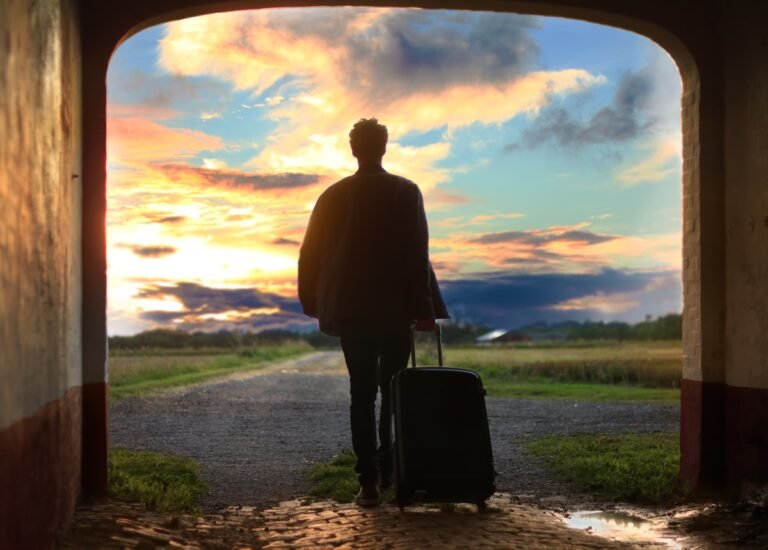
You return home, but it no longer feels entirely yours.
Home Stops Being a Location
Before traveling, home usually feels simple. It is your city, your neighborhood, your room, your people, your habits.
But travel stretches your identity across places.
Suddenly, a tiny café in Vietnam feels emotionally important. A random beach in Thailand feels familiar. A crowded train station in Europe reminds you of freedom. A hostel kitchen conversation in Colombia becomes a core memory.
Pieces of you remain everywhere.
Eventually, “home” becomes less about geography and more about moments, feelings, and states of mind.
You Outgrow Your Old Routine
Long-term travel changes the way you see time, money, comfort, and success.
Things that once felt important may suddenly feel unnecessary. Expensive clothes lose meaning after living from one backpack. Luxury stops impressing you after discovering how happy simple experiences can make you.
You also begin noticing how repetitive many routines are back home.
The same roads. The same conversations. The same schedules. The same stress cycles.
Travel exposes you to different ways of living, and once you realize there is no single “correct” lifestyle, it becomes difficult to fit perfectly back into the old one.
The World Feels Smaller — and You Feel Different
One of the biggest psychological shifts travel creates is perspective.
You realize how massive the world is and how tiny your previous bubble was. You meet people who live completely differently yet struggle with the same emotions: loneliness, ambition, love, fear, hope.
That awareness changes you permanently.
After enough experiences abroad, you may start feeling disconnected from conversations focused only on local drama, trends, or social expectations. Your internal world becomes wider than your physical location.
You Start Missing Places at the Same Time
Travelers often experience a strange emotional conflict:
Missing multiple places at once.
While sitting in your hometown, you miss the mountains you saw months ago. While abroad, you miss your family. While with family, you miss the freedom of movement.
You become emotionally divided between versions of your life.
This creates a feeling many travelers struggle to explain — being physically present somewhere while mentally attached somewhere else.
The Comfort Zone Changes Forever
Travel trains adaptability.
After navigating unfamiliar cities, surviving delayed flights, sleeping in uncomfortable places, and constantly meeting new people, uncertainty becomes normal.
Ironically, staying in one place too long can begin feeling uncomfortable instead.
Some travelers become addicted to movement not because they hate home, but because motion itself starts feeling natural.
People Around You May Not Fully Understand
Returning home after deep travel experiences can feel isolating.
Friends may expect you to “go back to normal” quickly. But internally, your mindset may have shifted completely.
You may crave simplicity while everyone chases status. You may value freedom over stability. You may care more about experiences than possessions.
Sometimes the hardest part of returning home is realizing you are no longer the exact same person who left.
Travel Creates Emotional Contradictions
Travel can make you feel deeply connected to humanity while also feeling rootless.
It teaches independence but can increase loneliness. It expands your worldview while making permanent belonging more complicated.
Many long-term travelers quietly live between two desires:
- The desire for stability
- The desire for freedom
Finding balance between those two becomes a lifelong challenge.
Maybe Home Becomes Internal
Some travelers eventually realize they may never feel completely “at home” in the traditional sense again.
But that is not always a bad thing.
Sometimes travel teaches you to build home internally instead of attaching it to a single place.
Home becomes your mindset, your memories, your adaptability, your peace, and the people you carry emotionally regardless of distance.
The world changes you when you move through it long enough.
And sometimes, after seeing too much of it, one place alone no longer feels big enough to hold who you have become.