What Traveling in Nigeria Is Really Like (Honest Experience)
Most travel content about Nigeria falls into one of two traps. Either it’s relentlessly negative — kidnappings, scams, chaos, do not travel — or it’s breathlessly promotional, selling you on a vibrant paradise with zero mention of the real challenges. Neither version prepares you for what actually awaits.
This article tries to do something different: describe what traveling in Nigeria honestly feels like, in all its contradictory, exhausting, exhilarating reality. The good, the difficult, and the parts nobody puts in the brochure.
Looking for accommodations? You will be redirected to Booking.com to check availability and prices. 🏨
Check Hotels & Prices →The First Thing You Notice: Scale and Energy
Nigeria is the most populous country in Africa, with over 220 million people. Lagos alone — just one city — has somewhere between 15 and 21 million residents depending on how you count. The moment you arrive, whether by air or across a land border, this scale hits you physically.
Lagos doesn’t ease you in. It arrives all at once: the noise, the heat, the smell of street food and exhaust, the sheer density of bodies and vehicles and commerce happening simultaneously on every surface. Danfos — the distinctive yellow minibuses — squeeze through gaps that shouldn’t be possible. Motorcycle taxis (okadas) thread through traffic with terrifying confidence. Market traders carry impossible loads on their heads while conducting phone calls.
Lagos has a reputation for being disorderly — with about 20 million residents, it is also a very crowded and noisy city. But in those unappealing vistas lies its charm and magnetism. If you can cut through that jumble, it’s bliss afterward. Nigerian Finder
That tension — overwhelming surface, extraordinary depth beneath — is Nigeria’s defining characteristic as a travel destination.
The People: Usually the Best Part
Ask almost any foreigner who has spent meaningful time in Nigeria what surprised them most, and the answer is almost always the same: the people.
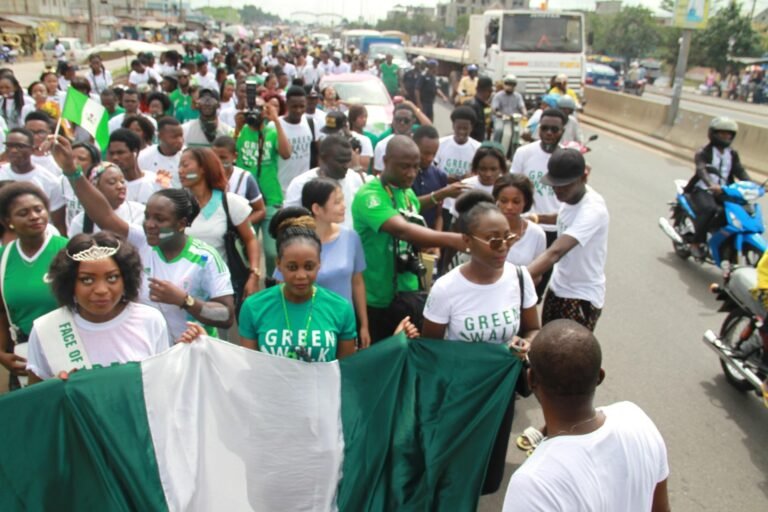
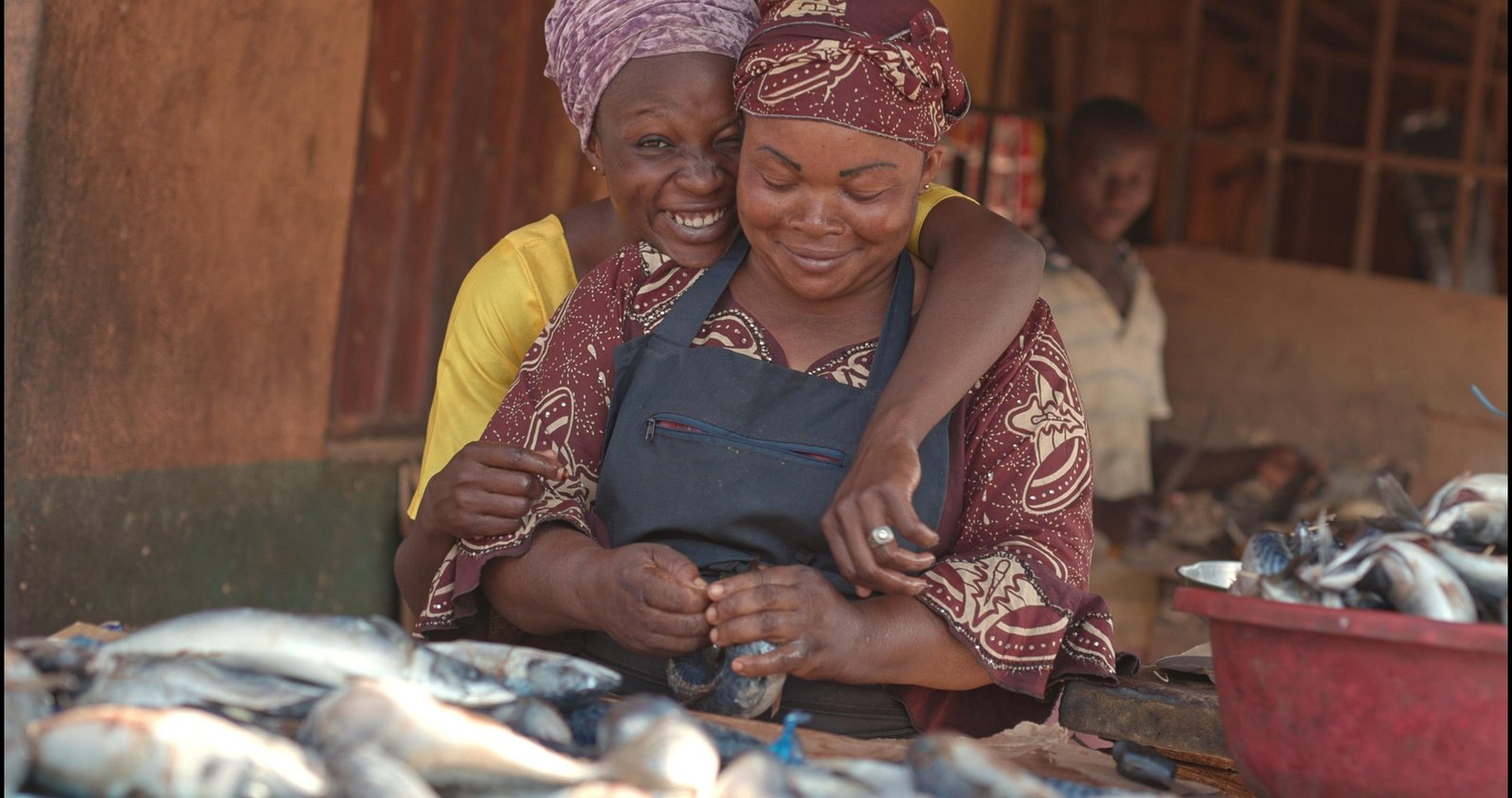
Nigerians have a reputation in the outside world shaped almost entirely by scam emails and crime statistics. On the ground, the dominant experience is warmth, curiosity, humor, and genuine hospitality. Strangers will go significantly out of their way to help you. Invitations to share meals, meet families, and join celebrations appear quickly and sincerely.
Keep in mind that the majority of people there are just like you and me, living honest lives and working hard. Nigeriansearchguide One Brazilian traveler who crosses Nigeria regularly for work put it plainly: Nigerians are mostly very helpful, respectful, and fun. Nigeria, like many countries, requires you to be smart when traveling — but its people are not the problem.
What catches travelers off-guard is how quickly real connections form. You are not an anonymous tourist here in the way you might be in a heavily-visited destination. People are interested in you — where you’re from, why you came, what you think of their country — and the conversations that follow are often genuinely memorable.
After they have spent a day or two in Nigeria, most visitors are surprised to see that the country is so much more than its reputation for scam artists and kidnappings. Shake off that image, and your trip could turn out to be one of your most fulfilling travel experiences. Nigerian Finder
The Food: A Serious Highlight
Nigerian cuisine is one of the great undiscovered pleasures of African travel for most Western visitors. It is bold, complex, deeply satisfying, and almost entirely unknown outside the diaspora.
The staples you will encounter repeatedly: jollof rice — Nigeria’s version of the beloved West African dish, served at every occasion from roadside stalls to wedding receptions, and the subject of ferocious inter-national debate about which country makes it best (Nigerians have no doubts). Suya — thin strips of beef marinated in ground peanuts and spices, grilled over charcoal, served wrapped in newspaper with raw onion and tomato. It is one of the finest street foods in the world, full stop. Pounded yam with egusi soup — a thick, intensely flavored soup made from ground melon seeds, leafy vegetables, and palm oil, served with smooth, elastic pounded yam for scooping. Eba and ogbono — the equivalent combination in the south, with cassava-based eba replacing yam.
Street-side vendors offer plantain (“dodo”) and peppery skewers of suya. Local staples such as eba, pounded yam, and jollof rice punctuate menus in roadside eateries and upscale restaurants alike. 4x4electric
Beyond the classics, Lagos specifically has developed a sophisticated restaurant scene in Lekki and Victoria Island that reflects the city’s international connections — you will find excellent Japanese, Lebanese, and contemporary Nigerian fine dining within a few kilometers of each other. But the best meals are almost always the simplest ones: a plastic chair at a roadside mama put, a plate heaped with rice and stew, eaten with strangers who become conversation partners within minutes.
One practical note: the food is often very spicy by Western standards. Pepper features heavily in almost everything. If you have a low heat tolerance, ask before ordering.
Getting Around: Challenging, Improvised, and Often Surprisingly Functional
Transport in Nigeria operates on a spectrum from modern and efficient to genuinely improvised, depending entirely on where you are and how much you want to spend.
In Lagos and Abuja, Uber and Bolt work well and are the single best transport decision a foreign traveler can make. Apps like Uber and Bolt are common in Nigerian cities — don’t wave down random taxis; stick to verified drivers and always share your ride details with someone you trust. Smartraveller The prices are reasonable, the cars are identifiable, and the process removes the negotiation dynamic entirely.
Outside ride-hailing apps, the options are danfos (shared minibuses running fixed routes, cheap, frequently overcrowded, and essential for understanding how the city actually moves), keke napeps (three-wheeled motorcycle taxis common in smaller cities), and okadas (motorcycle taxis). All of these require some tolerance for chaos and a sense of humor about personal space.
Driving around Lagos, as a recent visitor observed, is like racing in Formula 1. With scarce road markings and traffic signs, not to mention carefree motorists in danfos and kabu-kabus, it requires deft driving skills to move around. Nigerian Finder If you are driving yourself, this is not an exaggeration.
Traffic is the other unavoidable reality. Lagos traffic is not a minor inconvenience — it is a city-shaping phenomenon that restructures how residents think about time and distance. What looks like 10 km on a map can be a two-hour journey at the wrong time of day. Always budget extra time for travel between neighborhoods. Try to visit on a Sunday when traffic eases and you can explore more easily. Ioverlander
For intercity travel, domestic airlines connect Lagos, Abuja, Port Harcourt, Enugu, and other major cities. Traveling by road between cities is possible and done regularly, but requires the non-negotiable rule: never travel after dark. This applies everywhere in Nigeria without exception.
Accommodation: Wide Range, Variable Standards
Nigeria’s accommodation landscape has two distinct worlds that rarely overlap.
At the higher end — particularly in Victoria Island and Lekki in Lagos, and in Abuja’s Maitama and Wuse districts — you will find internationally-branded hotels and well-run boutique properties with the full range of amenities, reliable generators, security, and air conditioning that functions. These are not cheap by regional standards, but they work reliably.
Outside this tier, accommodation becomes more variable. Most homes don’t have AC, and the electric company regularly cuts the power, so unless the family or guesthouse has a decent generator it gets sticky without a fan. Alarinka Power outages — locally called “NEPA” after the old electricity authority — are simply part of daily life in Nigeria. Any accommodation worth staying in will have its own generator. Confirm this before booking.
Go for hotels with visible security, cameras, and good reviews. Don’t let a cheap room put your safety at risk. Smartraveller In cities you don’t know well, spending a little more on a well-reviewed hotel with reliable security is genuinely worth it.
Water is the other critical practical point: bottled water always — don’t accept water from a bottle where the lid has been opened. Alarinka Tap water is not safe for consumption anywhere in Nigeria.
The Music, Culture, and Nightlife: Genuinely World-Class
This is where Nigeria exceeds almost every expectation.
Lagos is ground zero for the Afrobeats revolution. Artists like Burna Boy, Wizkid, Tems, Davido, and Rema have taken the genre from Lagos street corners to Grammy stages — but experiencing Afrobeats in its birthplace is something entirely different. Alarinka
The live music scene in Lagos operates at a level that is genuinely difficult to overstate. The Shrine, the legendary venue in Ikeja founded by Fela Kuti’s family, hosts live performances every Thursday night — raw, authentic, and absolutely electric. Alarinka Felabration, the annual week-long festival held at the New Afrika Shrine, spans musical performances by renowned local and international artists, street parades, symposia, and cultural exhibitions — endorsed by the Lagos State Government as a recognized tourist destination. Funmiajala
Curated Afrobeats tours are increasingly offered by local operators, taking visitors through the legendary clubs and lounges where the genre was refined. Rex Clarke Adventures The rooftop bars and clubs of Victoria Island and Lekki regularly feature both established stars and rising artists in settings that feel nothing like a typical tourist experience.
Beyond music, the Nike Art Gallery in Lekki houses thousands of pieces by Nigerian artists, textiles, and crafts, celebrating Yoruba and wider Nigerian heritage. Medium Freedom Park, once Broad Street Prison, now hosts exhibitions and performances, underscoring the city’s layered past. 4x4electric The annual Art X Lagos in November is West Africa’s leading international art fair and attracts serious collectors and artists from across the continent.
Nigeria is famous for its film industry — Nollywood — which is the second largest in the world by volume of production, producing thousands of films each year that are widely viewed across Africa and beyond. IGBOAFRICANA Visiting Lagos without engaging even briefly with this creative ecosystem — its studios, its actors, its ubiquitous presence in daily conversation — is missing something central to understanding the city.
Beyond Lagos: What the Rest of Nigeria Offers
Most foreign travelers experience only Lagos or Abuja, and leave with an incomplete picture.
Abuja, the purpose-built capital, feels strikingly different from Lagos — calmer, more organized, with wide boulevards and a lower density that makes it significantly easier to navigate. Aso Rock, the massive rock formation towering over the city, is worth seeing, and Millennium Park is a nice spot for a relaxed walk. Just outside the city, Gurara Falls is a stunning waterfall, especially during the rainy season. Nigeriansearchguide
Benin City is one of West Africa’s most historically significant places — capital of the great Benin Empire, whose bronze sculptures are now at the center of international debates about repatriation of African art from European museums. The Royal Palace dates to the 13th century and remains occupied and significant.
The Osun-Osogbo Sacred Grove is a UNESCO-listed forest full of shrines and sculptures dedicated to the Yoruba goddess Osun. It feels like stepping into another world, and is one of the best places to experience traditional Nigerian spirituality and art. Nigeriansearchguide
Nigeria has a long, complex, and fascinating history, and has produced authors, poets, Nobel prizewinners, and musicians. Tripadvisor Chinua Achebe’s Things Fall Apart, Chimamanda Ngozi Adichie’s Half of a Yellow Sun, and Wole Soyinka’s poetry offer context that transforms a visit from tourism into genuine engagement. Read before you go.
The Difficult Parts: What Nobody Glosses Over
Honesty requires addressing what makes Nigeria challenging for travelers.
Infrastructure gaps are real. Power cuts, unpredictable water supply, road conditions outside major cities, and unreliable internet are not occasional inconveniences — they are baseline conditions that you adapt around rather than expect to avoid. This is not a destination where things simply work in the background.
Checkpoints and interactions with officials require patience and composure. Police, military, and various security personnel operate numerous checkpoints on major roads. Most interactions are routine. Some involve informal requests that experienced travelers handle with calm politeness rather than confrontation. Having your documents in order and staying respectful removes most friction.
Regional security is genuinely serious in some areas. The northeast of Nigeria — Borno, Yobe, parts of Adamawa — is an active conflict zone that should not be visited. Parts of the northwest have seen significant kidnapping and banditry. The Niger Delta states have elevated risk. These are real restrictions, not bureaucratic overcaution. Stick to southern cities and the established traveler routes and the security picture is substantially more manageable.
The price of being visibly foreign varies by context. You will sometimes be quoted higher prices for goods and taxis — sometimes dramatically higher. Negotiating is expected and not rude. Having a local friend or contact who can advise on fair prices eliminates much of this dynamic.
When to Go
Nigeria’s dry season runs from November to March and generally ensures more favorable weather for exploring and attending outdoor events. Rogue Wanderers This is when dust from the Sahara-driven Harmattan winds can also make the air hazy and dry, particularly in the north — bring lip balm and stay hydrated.
The rainy season from April to October brings heavy downpours that can flood streets and make road travel significantly more difficult, particularly in Lagos where drainage systems are inadequate for the volume. It also brings lush landscapes and lower crowds. December is a special time in Lagos — the period locals call “Detty December” brings the Nigerian diaspora home in large numbers, filling clubs and beaches and bringing an extraordinary energy to the city that must be experienced at least once.
The Honest Verdict
The reality is that the “unsafe” areas are places where people live — women, children, and families conducting their daily lives in communities that support and care for each other. The whole definition of “safe” in West Africa feels like a concept created by external people looking in from the outside. On the ground, the experience is of warm and hospitable people who are welcoming to and curious about visitors. Thinking Nomads
Nigeria is not a destination for travelers who require everything to be smooth, predictable, and comfortable. It demands flexibility, patience, cultural curiosity, and a genuine willingness to let go of fixed expectations. In return, it offers an intensity of experience — human connection, creative energy, culinary pleasure, historical depth — that is genuinely difficult to find anywhere else.
Nigeria is not the nightmare the world paints it to be. It is a country full of color, music, resilience, and stories waiting for you. Smartraveller That assessment, from someone who lives and works there, is also the honest conclusion from travelers who went with open eyes and came back changed.
Go prepared. Go curious. Don’t go at night.
📌 Security situations and travel conditions change. Check your government’s current travel advisory and the latest regional safety updates before any trip to Nigeria. Last updated March 2026.
Published on seekroutes.com — Overland and Sea Routes in Africa and Beyond.
Want to make your trip unforgettable? You will be redirected to GetYourGuide for top-rated tours, excursions, and experiences. 🌍
Discover Tours & Activities →